Know Your Customers Like Never Before
Shopping is no longer a one-size-fits-all experience. Modern consumers expect brands to understand their needs, preferences, and behaviors—often before they do themselves. Personalisation has become a crucial driver for success in eCommerce, enabling businesses to tailor their offerings and interactions to individual customers.
Artificial Intelligence (AI) plays a pivotal role in making personalised shopping possible at scale. By analyzing vast amounts of customer data, AI creates bespoke shopping experiences that feel intuitive and engaging. This blog explores how AI powers personalisation, the tools available to make it happen, and why now is the time to adopt these innovations.
If you manage an eCommerce business and want to stay ahead of competitors, this guide will show you how personalised shopping strategies driven by AI can unlock incredible opportunities for growth.
AI helps you show the right product to the right customer at exactly the right moment.
Why Personalisation is Critical in eCommerce
Personalisation isn’t just a nice-to-have feature—it’s a business imperative. Customers today want to feel seen, heard, and appreciated, and they’re more likely to remain loyal to brands that meet these expectations effectively.
The Benefits of Personalisation in eCommerce
Higher Conversion Rates: Personalised product recommendations account for up to 30% of eCommerce revenue, helping convert casual browsers into paying customers.
Customer Retention: Forbes reports that 80% of shoppers are more likely to buy from a store offering personalised experiences. When customers feel valued, they’re less likely to abandon your brand after one transaction.
Greater ROI on Marketing Efforts: Personalisation ensures that your marketing dollars are well spent. Instead of blanket campaigns, you can target specific customer segments with relevant offers.
Challenges to Achieving Personalisation
Despite its importance, many eCommerce brands struggle to implement effective personalisation strategies. Common obstacles include:
- Collecting and managing customer data across touchpoints.
- Identifying purchasing patterns or behaviors within overwhelming datasets.
- Scaling personalisation to match expanded product catalogs and audiences.
This is where AI steps in—offering tools and techniques that empower retailers to deliver personalisation at scale efficiently.
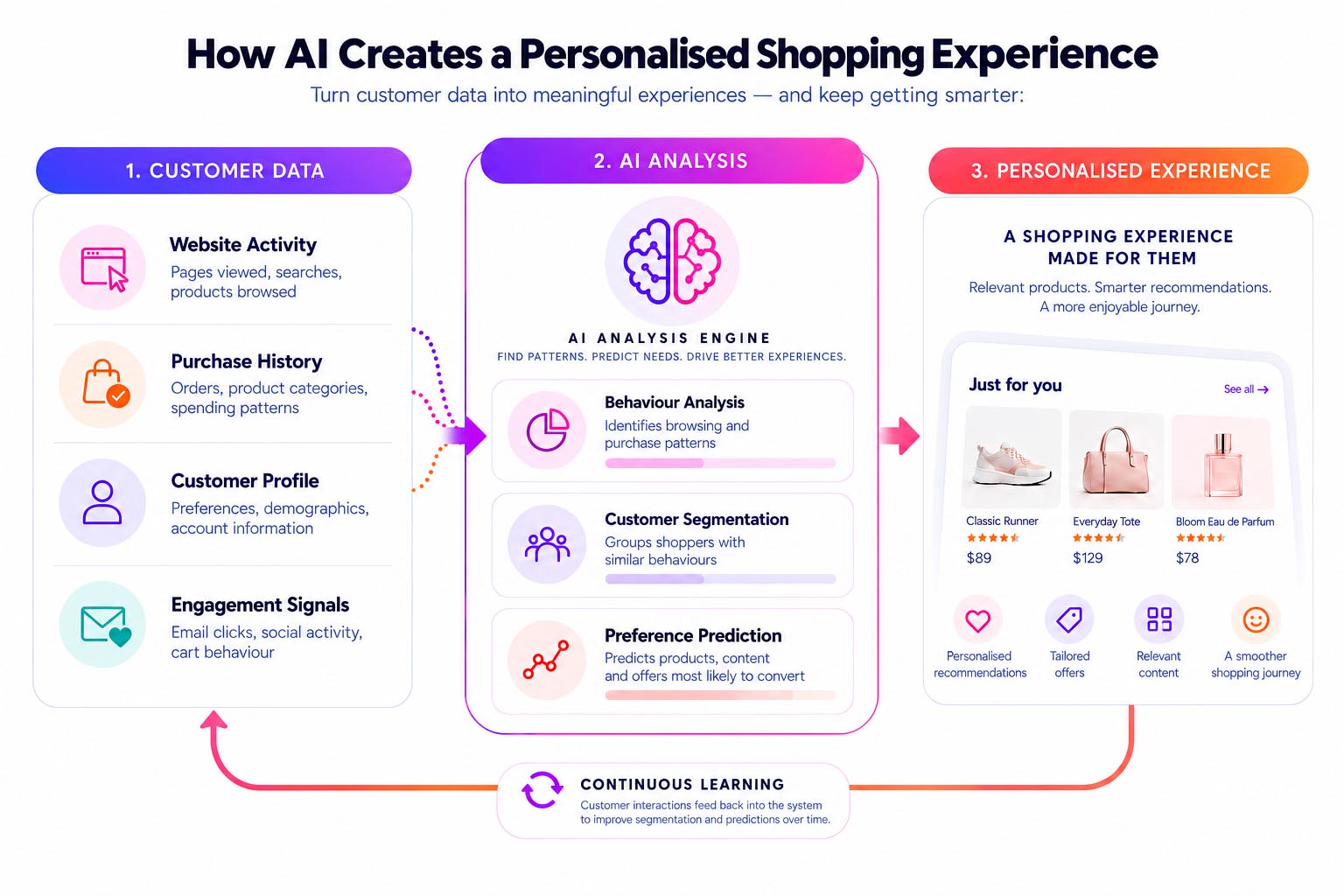
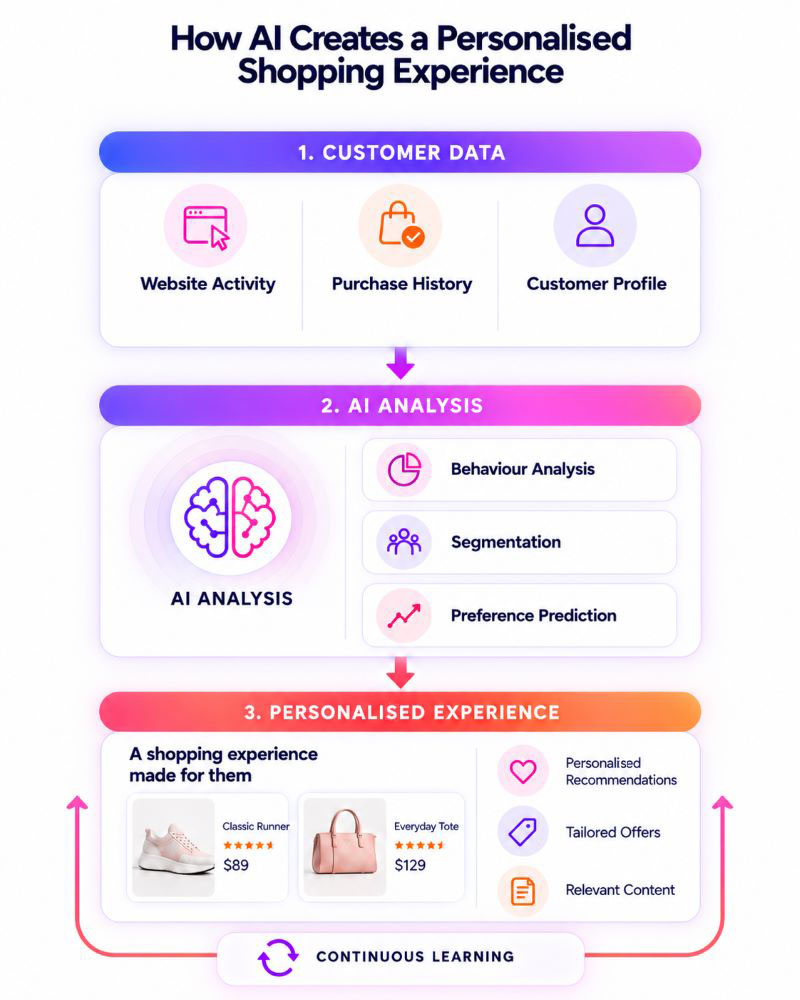
How AI Powers Personalised Shopping
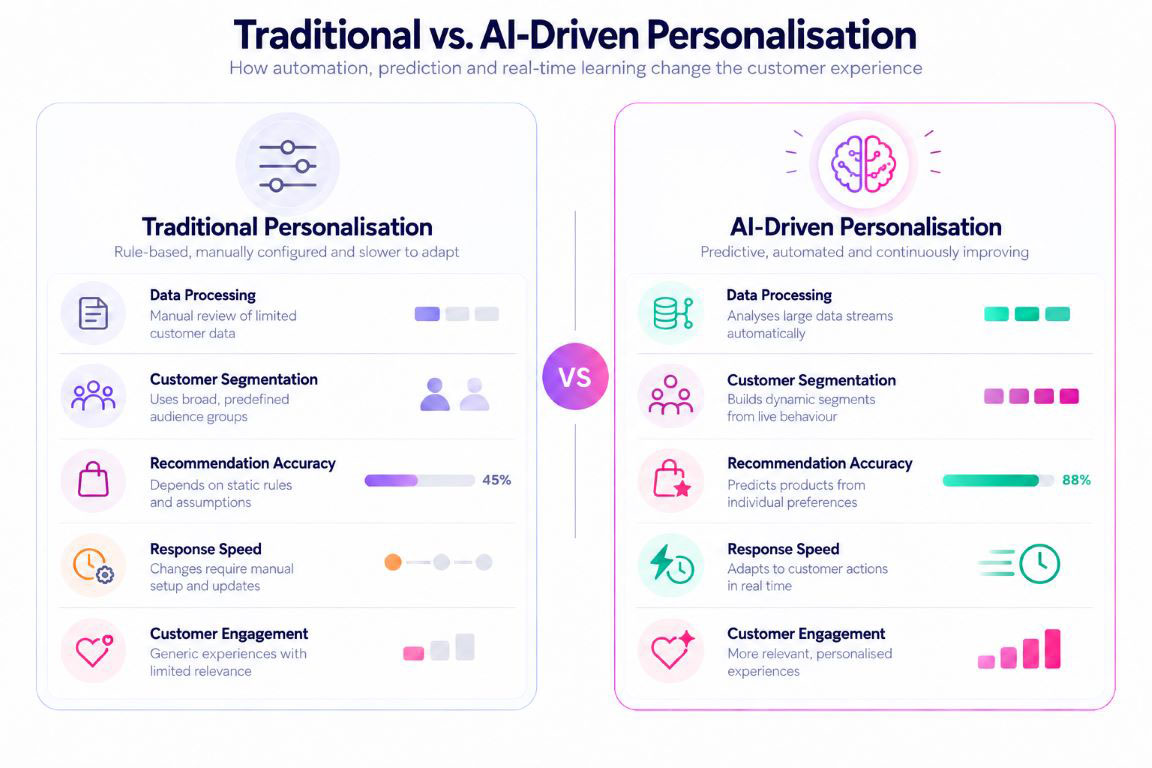
AI simplifies the complex process of personalising eCommerce, transforming raw customer data into meaningful insights and tailored experiences. Here’s how it works:
1. Data Collection Across Multiple Channels
AI gathers customer information from multiple touchpoints, including:
- Browsing behaviors on your website.
- Purchase histories.
- Social media interactions.
- Email engagement (e.g., customers clicking on newsletters).
All these data points are unified into a single profile for each customer. This holistic view enables more accurate personalisation without overwhelming your marketing or data analytics team.
2. Customer Segmentation Using AI Models
Machine learning algorithms excel at identifying patterns in customer data, allowing AI to segment audiences dynamically. For example:
- Grouping customers based on spending habits (e.g., “bargain hunters” versus “high spenders”).
- Differentiating between new and returning customers to offer tailored promotions unique to each group.
3. Tailored Product Recommendations
AI analyzes customer preferences to recommend products they are most likely to purchase. This extends to:
- Cross-selling (e.g., “You might also like these headphones to pair with your laptop”) and upselling strategies.
- Real-time adaptation based on browsing activity.
Even complex recommendations, such as suggesting complementary products in different product categories, are handled easily by AI systems.
4. Personalised Messaging and Promotions
AI determines the best ways to communicate with individual customers:
- Predicting the optimal time to send emails or push notifications.
- Customizing discounts based on user behavior, such as sending reminders about abandoned carts alongside a limited-time coupon.
5. Continuous Learning and Adaptation
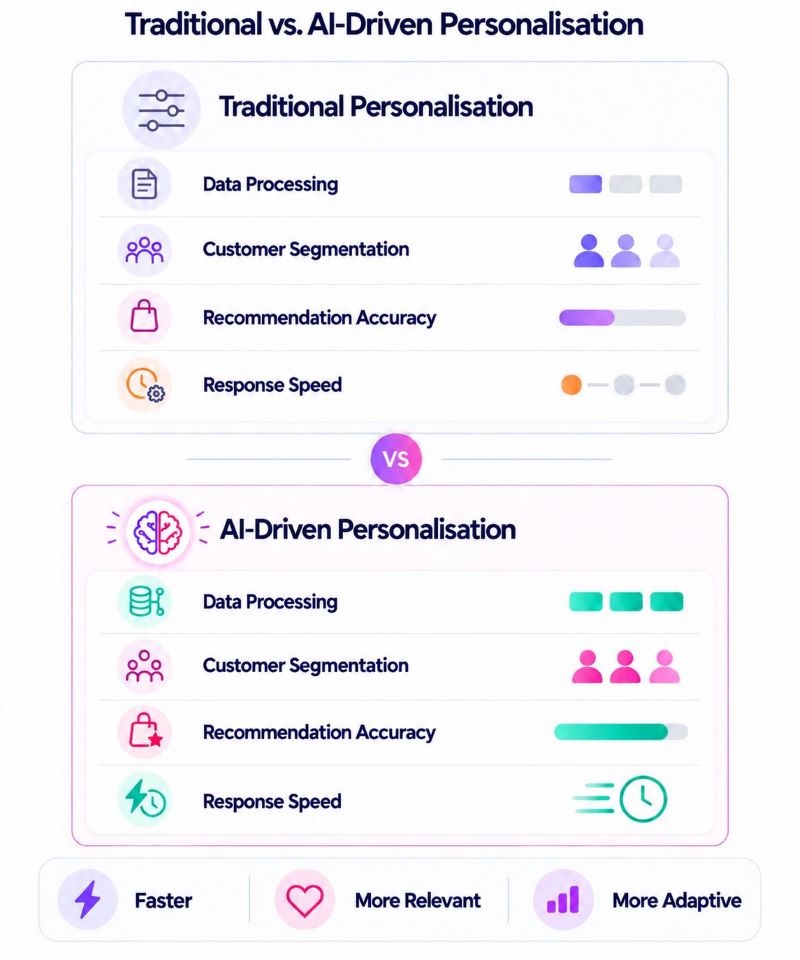
Unlike traditional systems, which require manual updates to adjust strategies, AI learns from new behavior patterns every day. This dynamic approach ensures your personalisation remains effective as customer needs and trends evolve.
We specialize in integrating AI-driven personalisation tools that fit your specific needs. Whether it’s adding product recommendation systems or dynamic pricing engines into your existing platform, we can make it happen seamlessly. Get in touch today to explore your integration options.
Personalisation Made Smarter
Use AI to deliver more relevant shopping experiences and drive better results.
Tools for AI-Driven Personalisation
If you’re ready to incorporate AI in your eCommerce strategy, choosing the right tools is crucial. Below are some standout solutions that enable advanced personalisation while offering API integrations for seamless implementation:
Overview: Dynamic Yield is a powerful platform for delivering tailored shopping experiences through product recommendations and personalised content.
Key Features:
- A/B testing for personalisation strategies.
- API support for integration with eCommerce platforms like Magento and Shopify.
Benefits: Businesses report higher cart values and better engagement using its advanced recommendation engine.
Overview: Algonomy is focused on real-time personalisation at scale.
Key Features:
- Predictive analytics to anticipate shopper needs.
- Omnichannel support connecting online and in-store data.
Benefits: Enables cross-channel personalisation for expanded customer engagement.
Overview: Segment captures first-party data across websites, mobile apps, and even billing systems to deliver unified customer insights.
Key Features:
- API-friendly integrations for data collection and analytics.
- Tools for building advanced segmentation rules.
Benefits: Simplifies the process of harmonizing customer data streams.
Overview: Persado uses AI to optimize marketing language, ensuring customer communication resonates on a personal level.
Key Features:
- AI-crafted headlines and messaging for maximum impact.
- Performance tracking to refine campaigns continually.
Benefits: Boosts ROI by aligning marketing copy with emotional triggers proven to drive conversions.
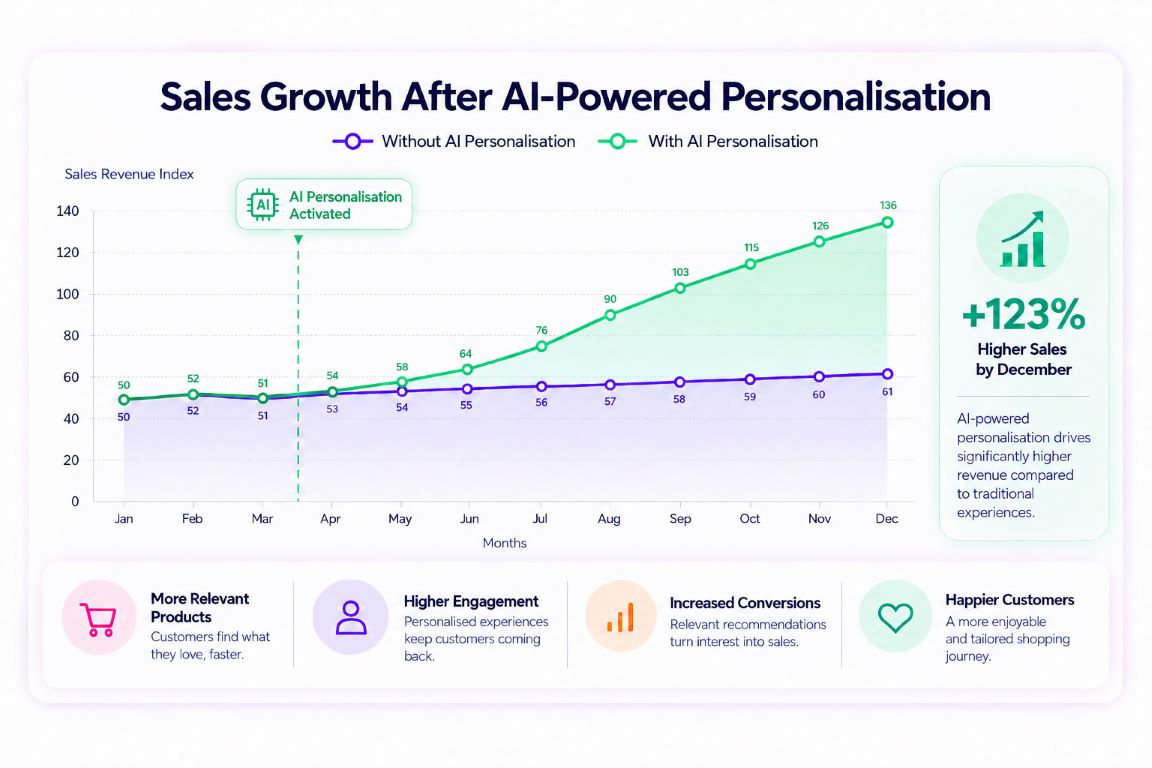
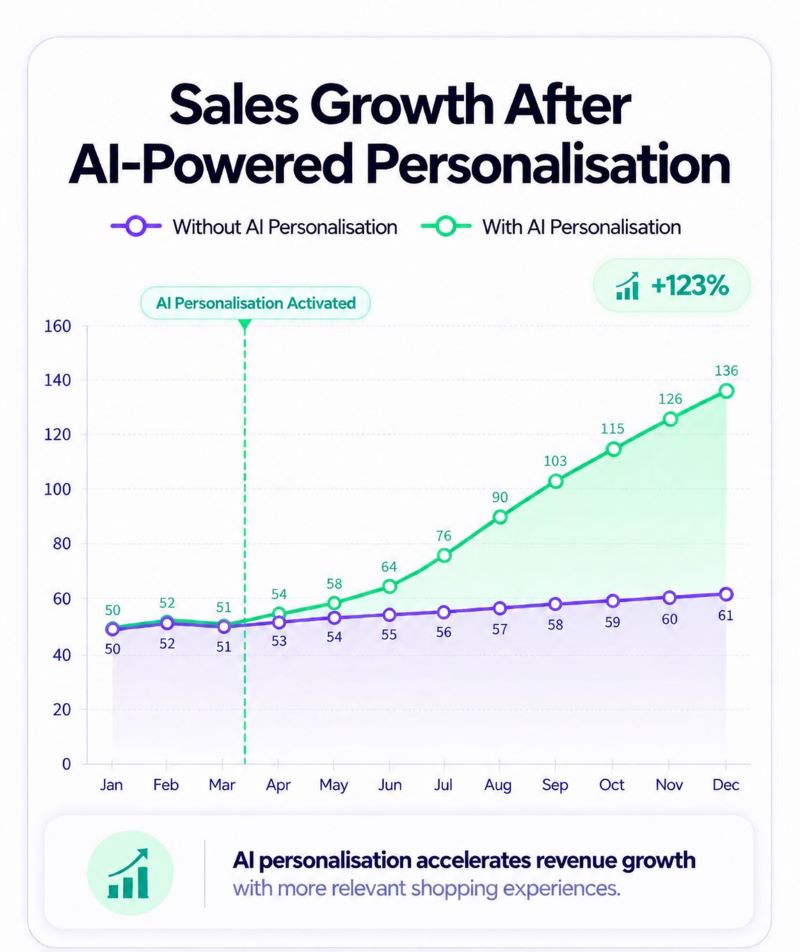
Need help integrating AI-powered personalisation tools with your eCommerce platform to deliver tailored shopping experiences?


Results You Can Achieve with AI Personalisation
Adopting AI-powered personalisation goes beyond short-term results; it drives long-term growth and customer loyalty. Here are some proven benefits businesses experience when they invest in AI-driven strategies:
1. Boosted Sales and Revenue
Tailored product recommendations and dynamic pricing ensure customers are more likely to complete a purchase. This translates directly into higher sales and better ROI on marketing efforts.
Example: A leading fashion retailer implemented a recommendation engine powered by Dynamic Yield and saw an 18% increase in average order value within four months.
2. Improved Customer Loyalty
By showing customers that you understand their preferences, they’re more likely to return for future purchases. Personalisation fosters trust, which drives retention.
3. Enhanced Customer Engagement
AI systems send the right message at the right time, whether it’s communicating an exclusive discount or recommending items based on seasonal trends.
4. Time and Cost Savings for Your Team
With AI handling data analysis and segmentation, your team can focus on creative human-centric tasks like building unique brand campaigns or developing partnerships.
To explore how personalisation can work for your brand, reach out to us. We provide tailored AI integration services that ensure seamless customer experiences.
Final Thoughts
Personalised shopping, powered by AI, has revolutionized how retailers connect with their customers. It’s no longer about simply selling products—it’s about delivering experiences that feel tailored, meaningful, and bespoke.


