Smarter Warehouses, Faster Fulfilment, Better Results!
Warehouse management is the backbone of any successful eCommerce operation. Efficient, accurate and well-coordinated processes help ensure timely deliveries, satisfied customers and reduced costs. Yet, many businesses still rely on traditional, manual methods that make scaling operations challenging.
Outdated practices often result in costly errors, delayed orders and underutilised warehouse space. But what if we told you there’s a smarter, faster and better way to manage warehouse operations? Artificial intelligence (AI) is transforming warehouse management, offering solutions that can optimise operations, reduce costs and improve accuracy.
This article unpacks how AI is transforming warehouse management, the tools driving these changes and how you can use this technology to prepare your business for the future.
AI can optimise warehouse operations, turning inefficiencies into opportunities for growth and scalability.
The Complexities of Traditional Warehouse Management
Warehouses have long been the beating heart of retail operations, but managing them has its fair share of challenges. Some of the major issues faced by businesses include:
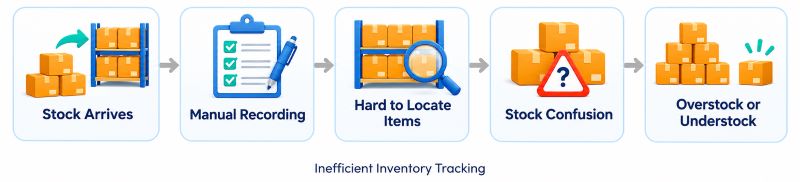
1. Inefficient Inventory Tracking
Locating items within sprawling warehouses can be a logistical nightmare. Manual tracking methods often lead to misplaced stock, overstocking or understocking—each of which can harm profitability.
2. Order Picking Errors
Picking the wrong items during fulfilment not only frustrates customers but also increases return rates and additional handling costs.
3. Space Utilisation Wastage
Warehouse space is expensive to maintain. Poor layouts and ineffective stock rotation often result in wasted space and inefficiency.
4. Labour Limitations
Manual work requires significant time, labour and planning. Human errors, staff shortages or inconsistent performance can lead to operational bottlenecks.
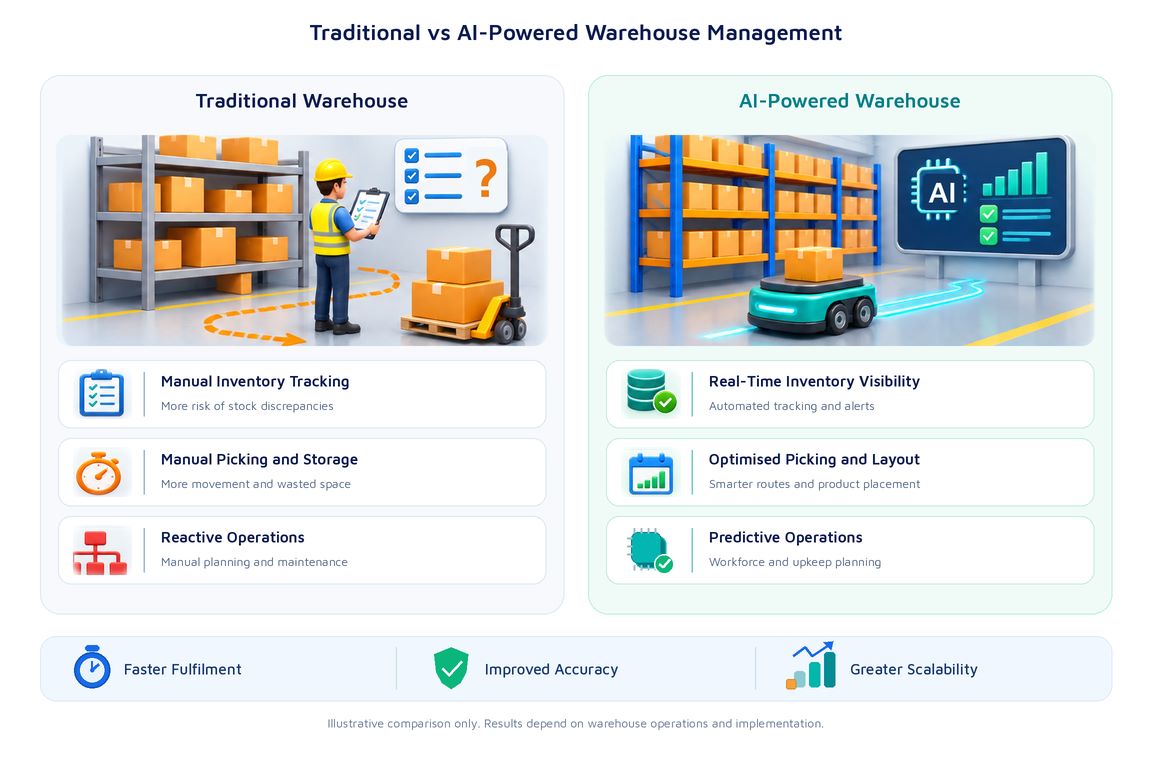
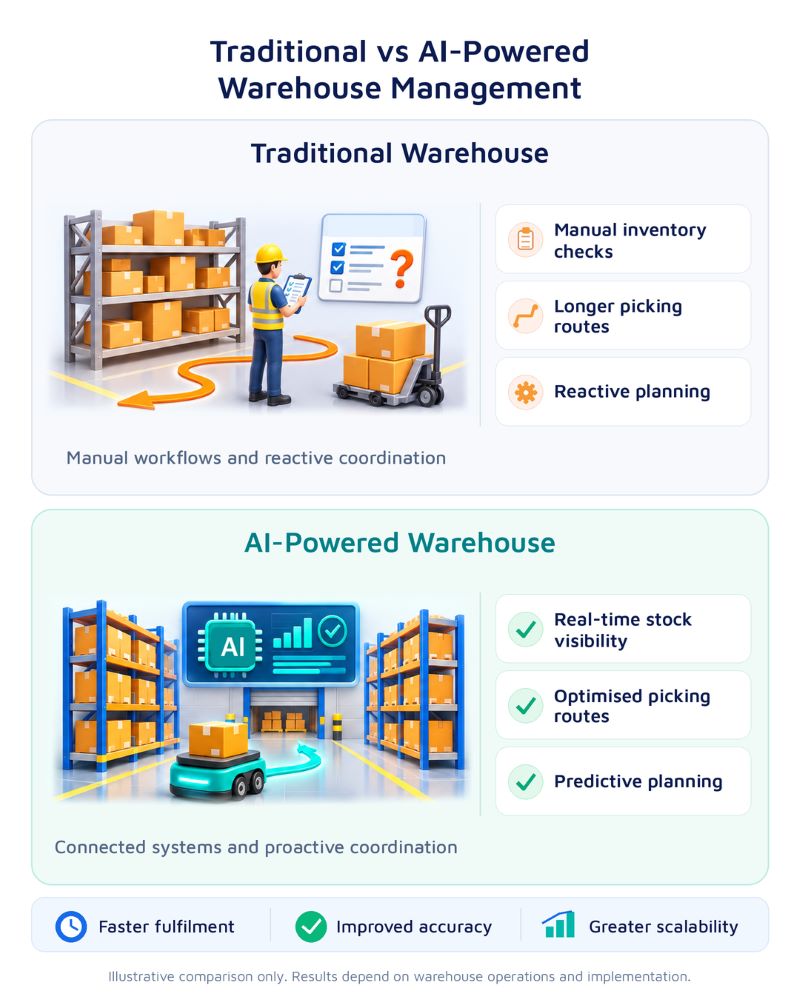
Traditional methods can limit flexibility and improvements as demand increases. While warehouse automation has existed for decades, AI represents a further evolution, offering new opportunities for efficiency and precision.
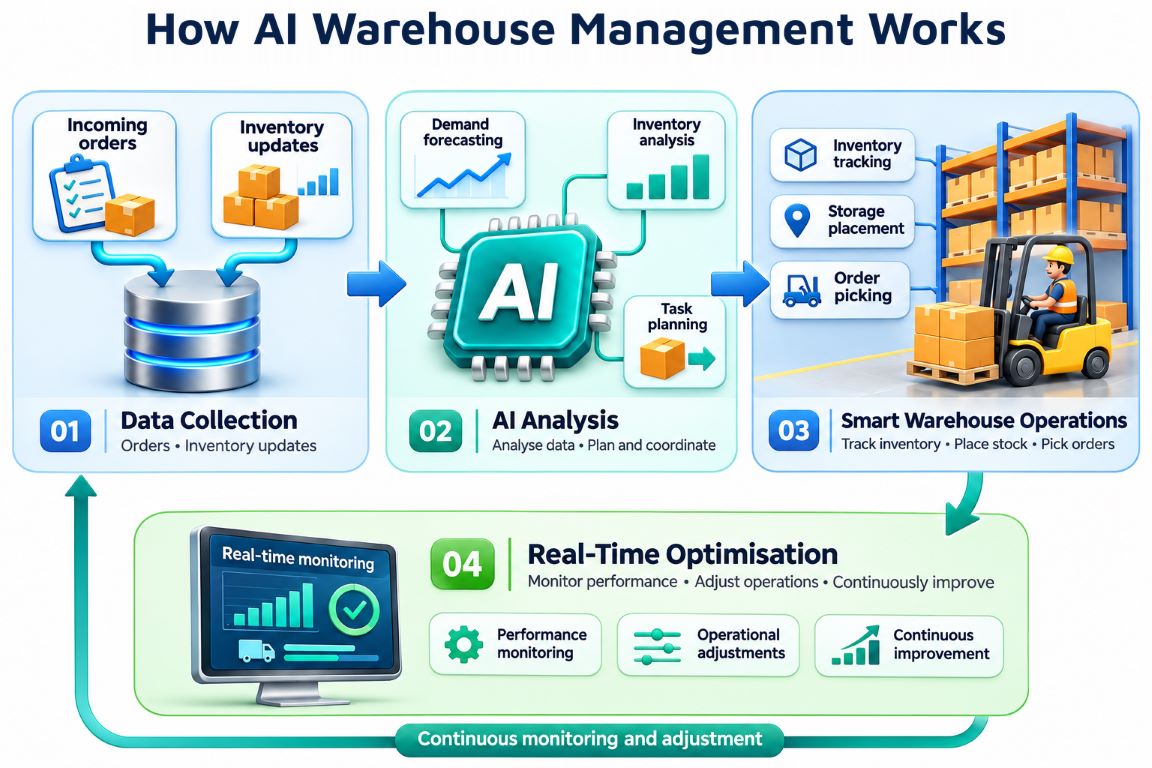
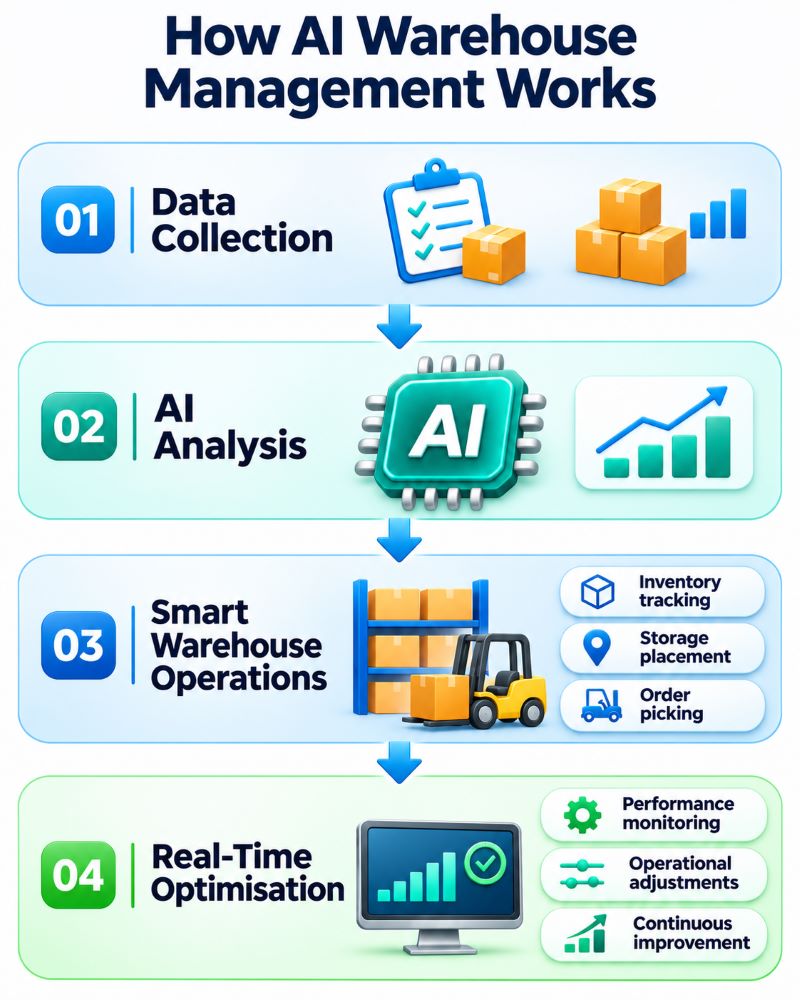
How AI Enhances Warehouse Operations
AI uses data, machine learning and automation to streamline important warehouse processes. Here’s how warehouse management can become smarter, faster and more efficient with AI:
1. Optimised Inventory Tracking
AI can work alongside inventory management systems, sensors and RFID tags to improve stock tracking and visibility. Benefits include:
- Real-time visibility into stock levels.
- Automated stock counts that reduce manual effort.
- Notifications for replenishment or stock shortages to help prevent downtime.
These systems can reduce guesswork while improving accuracy and helping businesses locate products within the warehouse.
2. Smarter Order Picking Systems
AI-powered robots and autonomous vehicles can improve order picking by:
- Mapping efficient picking routes for warehouse staff or robotic systems.
- Minimising movement time using predictive algorithms.
- Detecting and escalating issues such as unavailable items automatically.
Example: Businesses using AI-guided picking systems can improve fulfilment times by optimising picking routes and reducing unnecessary movement.
3. Intelligent Space Utilisation
AI can support smarter warehouse layouts by analysing storage patterns and optimising product placement to reduce wasted space. Additionally:
- Seasonal products can be prioritised for easy access during busy periods.
- Space utilisation can improve as the system analyses which areas are frequently or infrequently accessed.
4. Predictive Maintenance and Upkeep
Automated warehouse operations often rely on machinery functioning efficiently. AI-powered predictive maintenance systems can analyse equipment data to identify potential issues with machinery such as conveyor belts or forklifts, helping reduce unexpected breakdowns.
Integrating AI-driven management tools into your existing software systems can improve operational efficiency. We can help you customise these integrations to suit your operations.
5. Labour Optimisation
AI can help allocate tasks by analysing labour requirements based on demand. For example:
- It can predict peak periods and help schedule staff accordingly.
- It can monitor operational productivity and identify areas for training or process improvements.
By making data-driven decisions, warehouses can reduce errors and improve productivity.
Transform Your Warehouse Operations With AI Technology
Use AI-driven warehouse tools to improve inventory accuracy, speed up fulfilment and support business growth.
Key Tools Powering AI-Driven Warehouse Management
Adopting AI-powered technology begins with finding the right tools. Below are some solutions supporting warehouse optimisation, with API and integration capabilities varying by provider:
Overview: Designed for complex operations, this solution combines warehouse management, automation and intelligent tools to support inventory processes and changing supply chain needs.
Key Features:
- Labour management and optimisation tools.
- Real-time inventory visibility and integration capabilities.
Benefits: Helps optimise warehouse operations and improve order execution accuracy.
Overview: Infios provides warehouse management and supply chain execution solutions designed to improve operational efficiency and accuracy.
Key Features:
- Warehouse management and workflow optimisation.
- Integration with warehouse automation and robotics systems.
Benefits: Supports flexible and scalable warehouse operations.
Overview: Zebra Workcloud provides software solutions for workforce management, task execution and inventory optimisation.
Key Features:
- Task management and workflow coordination.
- Inventory visibility and workforce optimisation tools.
Benefits: Helps businesses improve task execution, inventory management and operational efficiency.
Overview: GreyOrange uses its GreyMatter software platform to coordinate warehouse robotics and fulfilment processes.
Key Features:
- AI-driven order orchestration and task allocation.
- Integration with warehouse robotics for efficient stock movements.
Benefits: Supports flexible and scalable warehouse automation.
Need help integrating AI-powered warehouse management into your business to improve inventory accuracy, streamline order fulfilment, optimise resources and support scalable growth?


Results Delivered by AI-Powered Warehouse Management
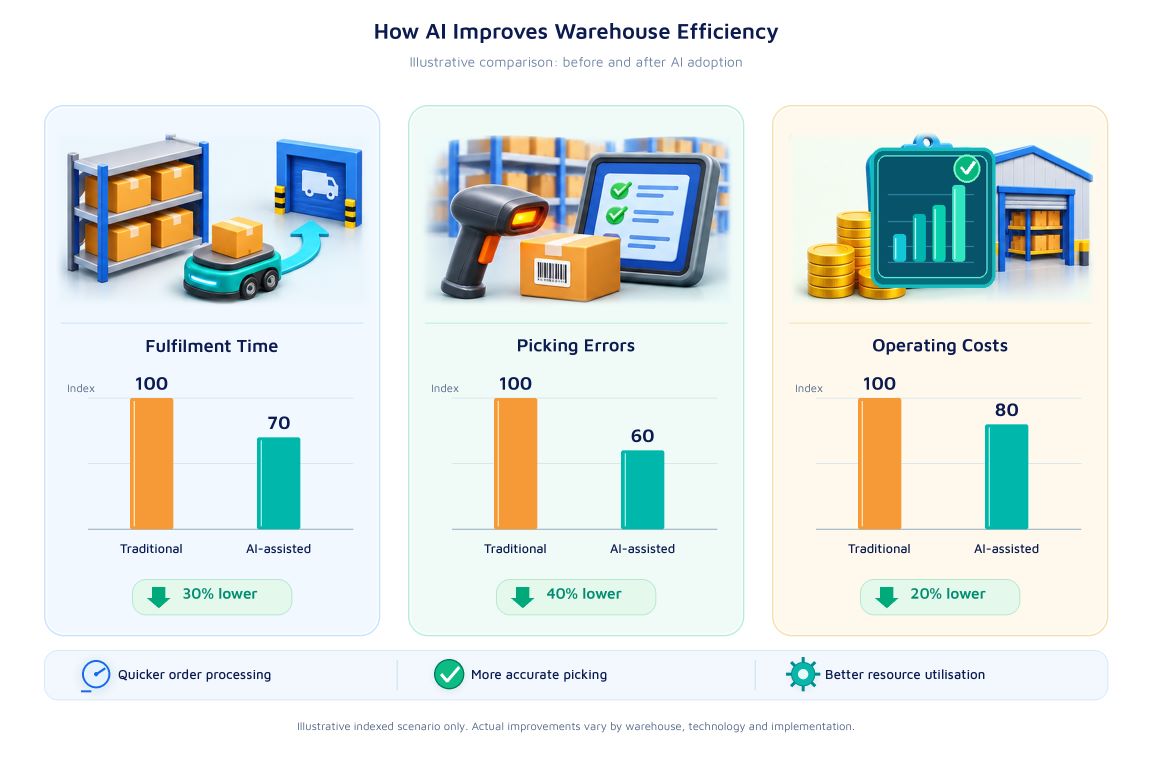
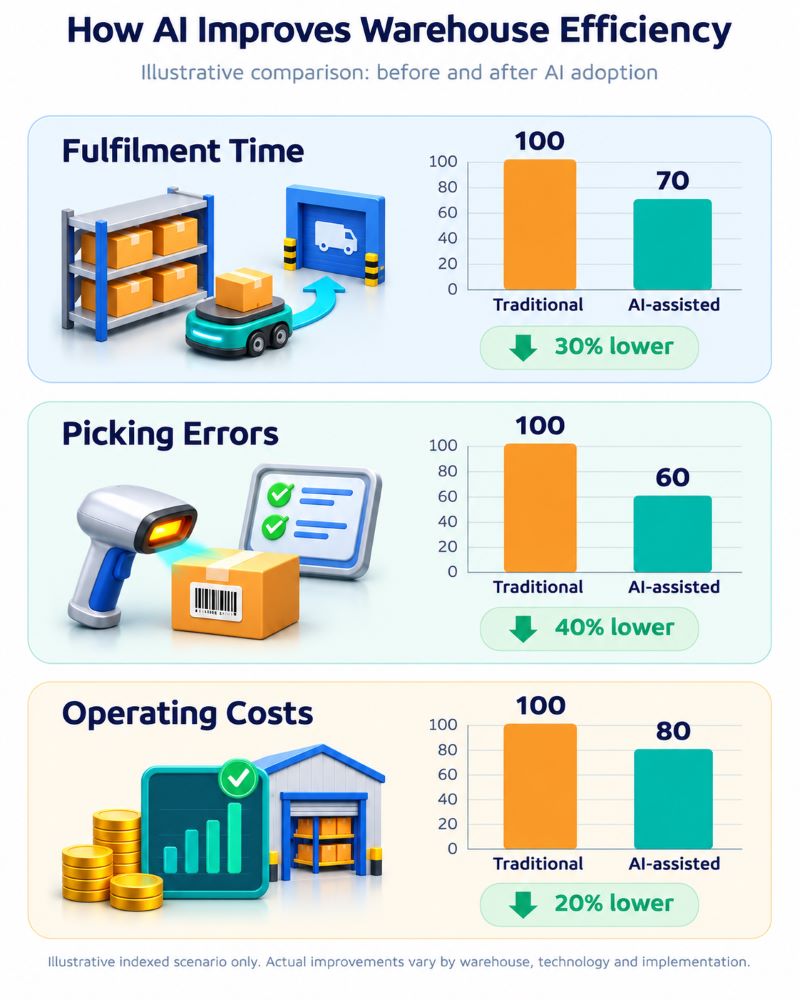
Deploying AI technologies in your warehouse can deliver measurable improvements that support business performance.
1. Reduced Operational Costs
AI can reduce errors, optimise workflows and improve resource utilisation, helping businesses minimise unnecessary expenses.
Example: A retailer implementing an AI-enabled warehouse management system could reduce operational overheads by improving inventory accuracy and streamlining warehouse processes.
2. Faster Order Fulfilment
With intelligent routing, robotic picking and automated workflows, AI can enable quicker order processing while improving accuracy.

3. Improved Stock Accuracy
AI-powered inventory systems can reduce reliance on error-prone manual tracking, helping minimise stock discrepancies.
4. Enhanced Scalability
AI-powered tools can help warehouses adapt as businesses grow, supporting operational efficiency during expansion or demand spikes.
By integrating modern AI tools, businesses can improve service quality while addressing the limitations of traditional systems. Contact us today to learn how we can tailor these systems to fit your requirements.
Final Thoughts
AI-powered warehouse management represents a significant shift in how businesses run their operations. By improving traditional systems, this technology can help businesses operate smarter, faster and more efficiently—improving productivity, lowering costs and meeting customer expectations. We specialise in helping businesses implement AI-driven solutions tailored to their unique challenges. Whether you’re interested in optimising inventory management or improving scalability, we can help. Contact us today to explore suitable solutions!


